What we do
We are committed to involving patients, service users, carers and family members in our work. We have a dedicated Patient and Public Involvement & Engagement (PPIE) Team who support our researchers and students to involve these groups in their research. They conduct and publish studies on how best to involve members of the public in health policy, research and practice.
We also support our Patient and Public Engagement Group (PenPEG) (formerly PenPIG), who are a group of patients, service users and carers. The PenPEG group volunteer their valuable time to ensure our research is relevant to the needs of the community.
Why involve the public in research?
Involving people in health and social care research is about giving the people who are meant to benefit from this research a say in shaping the research agenda. It requires lay people to be involved on an equal basis to academics and health care professionals. This includes not just participating in research that has been initiated by academics, but also in shifting the power balance so that users and carers can initiate research and work collaboratively with academics.
Researchers and clinicians often experience healthcare services from a specialised and expert point of view. Sometimes this means they stop noticing things that seem obvious to patients and members of the public, or they are too well trained to think of the more basic questions.
Patients, service users, carers and family members provide a different way of looking at things that can ground the discussion in real and practical experience. They can ask the seemingly obvious questions and provide insight into their experience as service users.
PenARC’s Patient and Public Involvement and Engagement Strategy
Our involvement and engagement strategy was co-produced by people in PenARC: public collaborators, researchers, the management team and the patient and public involvement team. This document outlines our principles and values, as well as our aims, and how we plan to meet these aims in our involvement work.
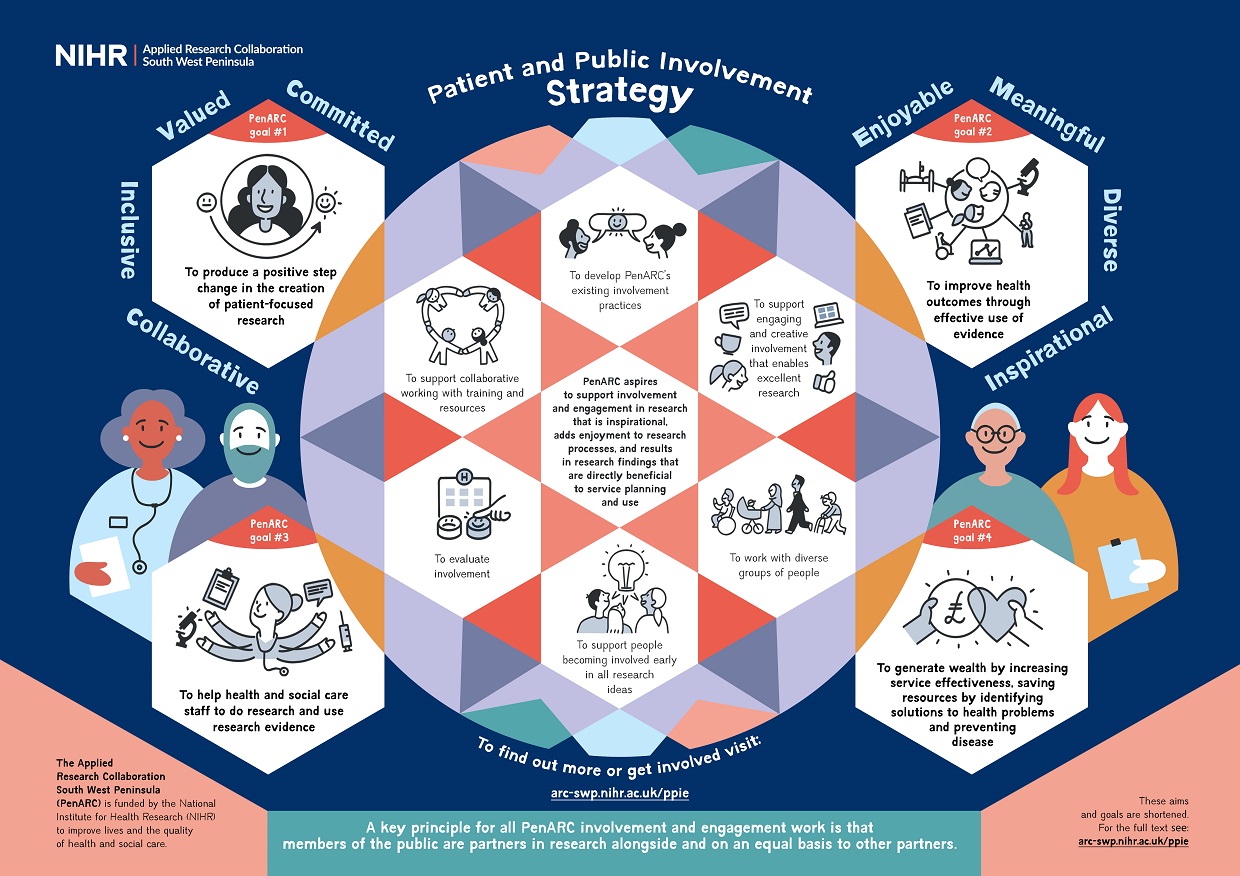
- Read our full Public Engagement Strategy.
- Watch a recording of the “Launch of the new PenARC involvement and engagement strategy”.
PenARC’s Patient and Public Involvement and Engagement Code of Practice
The University of Exeter’s Engaged Health Research Group has developed a Code of Practice, which details the principles that the PenARC PPIE team uphold in our practice when working with researchers and public collaborators on research.
The Code of Practice has three themes – Respectful Partnership, Inclusive Working and Purposeful Involvement. Each of these themes contain a series of statements that together encapsulate values-led PPIE from the perspective of the Engaged Health Research Group and PenARC.
The document concludes with a Working Agreement that the Principal Investigator and a member of the Engaged Health Research Group signs at the outset of working together. It signifies their mutual agreement to adopt a values-led approach to all the PPIE work within the research being undertaken together.
- Read the full Code of Practice.
How to get involved
To get involved you don’t need any medical experience or specialist knowledge. All you need is an interest in health and social care research, some time to spare and a willingness to share your thoughts and experiences with us.
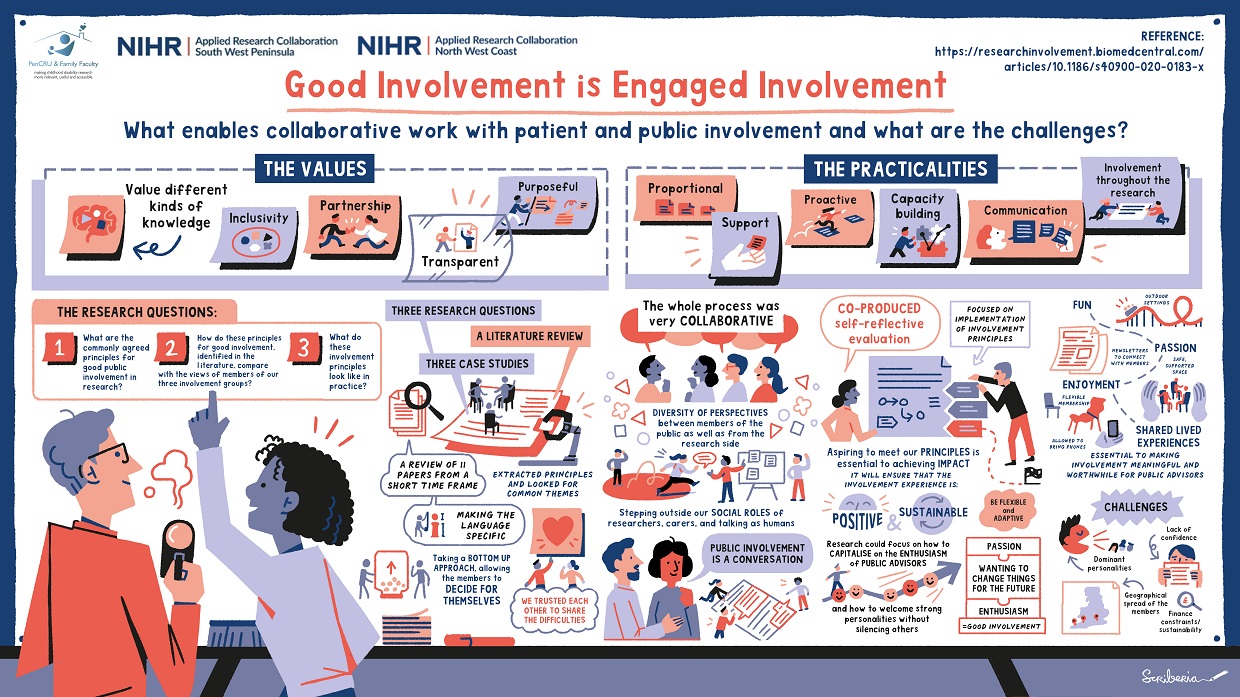
The NIHR have produced a really useful starting out guide called ‘Why and how to get involved in research’. It has been written to help and advise members of the public who would like to get involved, or have recently become involved in research. You can find key information and principles about getting involved in research, whatever your experience or prior knowledge. Read the guide here
Want to know more about the groups we work with? Find out here.